
Have you ever looked in the mirror and wondered, “Are these little specks on my skin just freckles, or are they something else entirely?” You’re not alone. Many people confuse various forms of skin discoloration, and understanding the nuances between them is crucial for proper skincare and effective treatment. While both dark spots vs freckles are common forms of hyperpigmentation, they have distinct origins, characteristics, and implications for your skin health. Misidentifying them can lead to ineffective treatments or, worse, ignoring a potential concern.
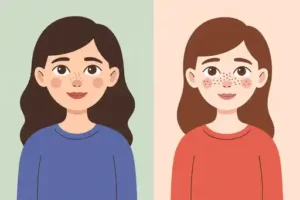
In this comprehensive guide, we’ll dive deep into the world of skin pigmentation. We’ll explore the fundamental differences between dark spots vs freckles, dissect their causes, discuss their appearances, and provide actionable advice on how to prevent and treat them. Whether you’re looking to embrace your natural freckles or seeking solutions for stubborn dark spots, this article will equip you with the knowledge you need to make informed decisions about your skin’s well-being. Get ready to demystify your skin’s unique patterns and learn how to care for it effectively.
Understanding Skin Pigmentation: The Basics
Before we differentiate between dark spots vs freckles, let’s briefly touch upon the science behind skin color. Your skin’s color is primarily determined by a pigment called melanin, produced by specialized cells called melanocytes. Melanin acts as your body’s natural sunscreen, absorbing harmful UV radiation. When these melanocytes produce too much melanin in certain areas, it results in localized patches of darker skin, which we commonly refer to as pigmentation. This overproduction can be triggered by various factors, with sun exposure being a major culprit for many forms of skin discoloration.
What Are Freckles?
Freckles, medically known as ephelides, are perhaps the most charming and often beloved form of skin pigmentation. They are small, flat, light brown or reddish-brown spots that typically appear on sun-exposed skin, such as the face, arms, and shoulders. They are more common in individuals with fair skin, especially those with red hair.
Characteristics of Freckles
- Appearance: Small, flat, round or irregular spots, usually 1-2 mm in diameter.
- Color: Light brown, tan, or reddish-brown.
- Location: Primarily on sun-exposed areas like the face, nose, cheeks, shoulders, and arms.
- Behavior: They tend to become more prominent after sun exposure and often fade or disappear during winter months when sun exposure is reduced.
- Texture: Smooth to the touch, they don’t raise above the skin’s surface.
Causes of Freckles
The development of freckles is a combination of genetics and sun exposure:
- Genetics: A specific gene, MC1R, plays a significant role in determining whether a person will develop freckles. This gene also influences hair and skin color.
- Sun Exposure: UV radiation stimulates melanocytes to produce more melanin, leading to the darkening and appearance of freckles. This is why children often develop freckles after their first few summers outdoors.
Are Freckles Harmful?
Generally, freckles are benign and pose no health risk. They are simply an indicator of sun exposure and a genetic predisposition. However, having many freckles can sometimes be associated with increased sensitivity to the sun and a higher risk of sun damage, including skin cancer, simply because individuals prone to freckles often have lighter skin types that burn easily. Therefore, sun protection is always paramount, regardless of whether you have freckles or not.
Managing and Embracing Freckles
For most, freckles are a distinctive feature to be embraced. If you wish to minimize their appearance, consistent sun protection is key. No specific “treatment” for freckles is typically needed unless for cosmetic preference. They are a natural part of your skin’s response to the environment.
What Are Dark Spots (Hyperpigmentation)?
Dark spots, often referred to as hyperpigmentation, are a broader category of skin discoloration. Unlike freckles, they are not solely tied to genetics and reversible sun exposure. Dark spots are persistent patches of skin that become darker than the surrounding skin due to an overproduction of melanin, and they often require more targeted intervention.
Types of Dark Spots
Dark spots encompass several different conditions, each with unique causes:
- Sun Spots (Lentigines or Age Spots):
- Characteristics: Flat, oval-shaped spots, ranging from tan to dark brown or black. They are typically larger than freckles (a few millimeters to over a centimeter).
- Causes: Prolonged and cumulative sun exposure over years. They are common in individuals over 40 but can appear earlier.
- Location: Most common on areas heavily exposed to the sun, such as the face, hands, shoulders, and arms.
- Post-Inflammatory Hyperpigmentation (PIH):
- Characteristics: Appears as flat patches of darkened skin that range from pink, red, brown, or black, depending on your skin tone.
- Causes: Occurs after an inflammatory skin injury or condition, such as acne, eczema, psoriasis, or even minor cuts and burns. The skin’s healing process triggers excess melanin production.
- Location: Can appear anywhere on the body where inflammation has occurred.
- Melasma:
- Characteristics: Larger, irregular patches of brown or grayish-brown skin discoloration. Often symmetrical.
- Causes: A complex condition often triggered by hormonal changes (e.g., pregnancy, birth control pills), combined with sun exposure. Genetic predisposition also plays a role.
- Location: Commonly found on the face, particularly the cheeks, bridge of the nose, forehead, chin, and upper lip.
Characteristics of Dark Spots (General)
- Appearance: Can vary greatly in size, shape, and color depending on the type (from small, distinct spots to large, irregular patches).
- Color: Tan, brown, dark brown, black, or even grayish-blue.
- Location: Can appear anywhere, but sun-exposed areas (sun spots, melasma) or sites of inflammation (PIH) are common.
- Behavior: Tend to be persistent and do not fade significantly in the absence of sun exposure, unlike freckles. They often require active treatment to lighten.
- Texture: Usually flat, but some types of dark spots (like certain moles) can be raised. It’s important to monitor any raised or changing spots.
Causes of Dark Spots
The triggers for dark spots are more diverse than for freckles:
- Sun Exposure: The primary cause of sun spots and a significant exacerbating factor for melasma and PIH.
- Inflammation: Skin injuries, acne breakouts, allergic reactions, and other inflammatory conditions can leave behind dark marks (PIH).
- Hormonal Changes: Fluctuations in hormones, particularly estrogen and progesterone, are a key factor in melasma.
- Age: As skin ages, melanocytes can become less regulated, leading to more concentrated areas of pigment.
- Medications: Certain medications can cause photosensitivity or trigger hyperpigmentation as a side effect.
Are Dark Spots Harmful?
Most common dark spots (sun spots, PIH, melasma) are cosmetically bothersome but not medically harmful. However, they are a strong indicator of past sun damage, which increases the risk of skin cancer. It’s crucial to distinguish harmless dark spots from potentially cancerous lesions like melanoma. Any new, rapidly changing, asymmetrical, irregularly bordered, or multi-colored dark spot should be examined by a dermatologist.
Dark Spots Vs Freckles: The Key Differences
To summarize, here’s a clear comparison to help you tell the difference between dark spots vs freckles:
| Feature | Freckles (Ephelides) | Dark Spots (Hyperpigmentation) |
|---|---|---|
| Primary Cause | Genetics + acute sun exposure | Chronic sun exposure, inflammation, hormones, age, medication |
| Appearance | Small (1-2mm), flat, light brown/reddish-brown, distinct borders | Varying sizes, shapes, and colors (tan to dark brown/black); can be small spots or large patches; sometimes irregular borders |
| Behavior | Darken with sun, fade in winter, appear in childhood/adolescence | Persistent, do not fade significantly with less sun, appear later in life (sun spots) or after injury (PIH) |
| Genetic Link | Strong genetic predisposition (MC1R gene) | Some genetic predisposition for melasma, but less direct for others |
| Treatment Needs | Generally none, sun protection for prevention/minimization | Often requires active topical or professional treatments to lighten |
Treatment and Prevention Strategies
Understanding the distinction between dark spots vs freckles is key to choosing the right approach for your skin.
For Freckles
Since freckles are largely genetic and benign, treatment is typically not necessary. The best approach is:
- Consistent Sun Protection: This is the most crucial step. Use a broad-spectrum sunscreen with an SPF of 30 or higher daily, wear wide-brimmed hats, and seek shade during peak sun hours (10 AM to 4 PM). This will help prevent existing freckles from darkening and new ones from forming.
- Embrace Them: Many people find freckles to be a beautiful and unique feature.
For Dark Spots (Hyperpigmentation)
Treating dark spots often requires a multi-faceted approach, combining prevention with targeted treatments. The goal is to reduce melanin production and encourage skin cell turnover.
Topical Treatments:
- Vitamin C: A powerful antioxidant that brightens skin and inhibits melanin production.
- Niacinamide (Vitamin B3): Reduces inflammation and prevents the transfer of pigment to skin cells.
- Alpha Arbutin & Kojic Acid: Natural skin brighteners that inhibit tyrosinase, an enzyme critical for melanin production.
- Retinoids (Retinol, Tretinoin): Increase cell turnover, helping to shed pigmented skin cells faster. They also improve overall skin texture.
- Hydroquinone: A strong skin-lightening agent available by prescription, or in lower concentrations over-the-counter. It directly inhibits melanin production. Use under professional guidance due to potential side effects.
- AHAs (Alpha Hydroxy Acids) & BHAs (Beta Hydroxy Acids): Exfoliate the skin, helping to remove pigmented surface cells. Examples include glycolic acid and salicylic acid.
Professional Treatments:
For more stubborn or widespread dark spots, a dermatologist can offer in-office procedures:
- Chemical Peels: Apply an acid solution to exfoliate the skin, leading to new, less pigmented skin.
- Laser Therapy: Various lasers (e.g., Q-switched, Fraxel, picosecond lasers) target and break down melanin in the skin.
- Microdermabrasion: A minimally invasive procedure that exfoliates the outermost layer of skin.
- Microneedling: Creates tiny punctures in the skin to stimulate collagen production and can be combined with topical lightening agents.
Prevention is Key for Dark Spots:
- Daily Sunscreen: Non-negotiable! Use broad-spectrum SPF 30+ daily, even on cloudy days and indoors near windows. Reapply every two hours when outdoors.
- Protective Clothing: Wear hats, sunglasses, and UPF clothing.
- Avoid Picking: Resist the urge to pick at acne or scabs, as this can worsen PIH.
- Gentle Skincare: Use products that don’t irritate your skin, as inflammation can lead to hyperpigmentation.
When to See a Dermatologist
While many dark spots are harmless, it’s always wise to consult a dermatologist if:
- You notice any new dark spots or changes in existing ones (size, shape, color, texture).
- A spot is bleeding, itching, or painful.
- You are unsure if a spot is a freckle, sun spot, or potentially something more serious.
- Over-the-counter treatments aren’t providing desired results for your dark spots.
- You have extensive or persistent melasma or PIH.
A dermatologist can accurately diagnose your skin concerns and recommend the most appropriate and safest course of action.
Recommended Products
To help you manage and protect your skin from various forms of hyperpigmentation, here are some highly-rated products that align with the advice given for both dark spots vs freckles concerns:
La Roche-Posay Anthelios Melt-in Milk Sunscreen SPF 60
A broad-spectrum, water-resistant sunscreen crucial for preventing sun damage and the darkening of both freckles and dark spots.
CeraVe Skin Renewing Vitamin C Serum
This serum contains 10% pure Vitamin C to brighten skin tone and reduce the appearance of dark spots, while supporting the skin barrier.
The Ordinary Niacinamide 10% + Zinc 1%
An affordable and effective serum for reducing skin congestion, inflammation, and supporting an even skin tone, beneficial for PIH and overall clarity.
CeraVe Hydrating Facial Cleanser
A gentle, non-stripping cleanser that maintains the skin’s natural barrier, preventing irritation that can lead to hyperpigmentation.
This retinol cream helps accelerate skin cell turnover, effectively reducing the appearance of dark spots and improving skin texture over time.
Frequently Asked Questions (FAQ)
Q1: Can freckles turn into dark spots or skin cancer?
No, freckles themselves do not “turn into” dark spots (like sun spots) or skin cancer. However, individuals with many freckles often have fair skin and a genetic predisposition to sun damage. This means they are at a higher risk for developing sun spots and skin cancers, including melanoma, due to cumulative sun exposure. It’s crucial to differentiate between a harmless freckle and a potentially dangerous mole or lesion, especially if it changes in size, shape, color, or texture. Regular skin checks are recommended.
Q2: Is it possible to completely remove dark spots?
While achieving complete removal can be challenging, especially for deep-seated pigmentation like melasma, significant lightening and improvement of dark spots are often possible with consistent treatment. A combination of topical agents and professional procedures typically yields the best results. However, vigilance with sun protection is essential, as dark spots can recur if the skin is re-exposed to triggers like UV radiation or inflammation.
Q3: Are “age spots” the same as dark spots?
Yes, “age spots” are a specific type of dark spot. Medically known as solar lentigines or liver spots, they are dark spots caused by chronic exposure to ultraviolet (UV) light over many years. They are most common in people over 40 but can appear earlier in individuals with significant sun exposure. Therefore, all age spots are dark spots, but not all dark spots are age spots (e.g., PIH from acne is a dark spot but not an age spot).
Q4: Can diet or supplements help with dark spots or freckles?
While a healthy diet rich in antioxidants can support overall skin health, there’s limited direct evidence that specific foods or supplements can eliminate existing dark spots or freckles. However, some studies suggest that antioxidants like Vitamin C and E, and certain polyphenols found in fruits and vegetables, can help protect the skin from sun damage and may play a role in preventing new pigmentation from forming. Always consult a healthcare provider before taking new supplements.
Q5: What’s the most important step in preventing both dark spots and freckles?
Without a doubt, the single most important step for preventing both the formation and darkening of dark spots and freckles is consistent and diligent sun protection. This includes daily use of broad-spectrum sunscreen with SPF 30+, wearing protective clothing like hats and sunglasses, and seeking shade, especially during peak UV hours. UV radiation is the primary trigger for melanin overproduction in both cases.
Conclusion
Navigating the landscape of skin pigmentation, especially distinguishing between dark spots vs freckles, can seem daunting, but armed with the right information, it becomes much clearer. We’ve explored how freckles are primarily genetic and sun-induced, often fading with less sun exposure, representing a natural and often cherished characteristic. In contrast, dark spots encompass various forms of hyperpigmentation, including sun spots, PIH, and melasma, which are typically more persistent and arise from a broader range of triggers like cumulative sun exposure, inflammation, and hormonal shifts.
The key takeaway is that while both are rooted in melanin, their underlying causes and behavior dictate different approaches to care. For both, sun protection remains your ultimate defense. For dark spots, a targeted regimen involving specific topical ingredients and potentially professional treatments can significantly improve their appearance. Remember, your skin tells a story, and understanding its unique language—the difference between dark spots vs freckles—empowers you to care for it effectively. If you’re ever in doubt about a spot on your skin, always consult a dermatologist for personalized advice and peace of mind. Embrace your skin, protect it wisely, and celebrate its unique beauty.
“`