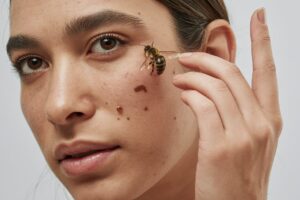
Imagine a skincare ingredient that not only helps to fade existing dark spots but also contributes to overall skin rejuvenation. Bee venom, harvested ethically and safely, contains a complex cocktail of enzymes, peptides, and amino acids that work synergistically to improve skin health. But how exactly does this powerful elixir work on those stubborn dark patches? Is it truly a magic bullet, or are there precautions to consider?
This comprehensive guide will dive deep into the world of bee venom skincare. We’ll explore the science behind dark spots, unravel the components of bee venom, and reveal how it can potentially diminish hyperpigmentation. We’ll discuss its benefits, crucial safety considerations, and how to effectively incorporate bee venom for dark spots into your daily routine. Get ready to discover if this ‘liquid gold’ from the hive is the secret your skin has been waiting for!
What Are Dark Spots and Why Do They Appear?
Dark spots, scientifically known as hyperpigmentation, are a common skin concern characterized by patches of skin that become darker than the surrounding areas. They can affect anyone, regardless of skin type or tone, and are often a significant source of frustration for those seeking an even, radiant complexion.
Types of Hyperpigmentation
- Sun Spots (Lentigines): Also called age spots or liver spots, these flat, oval areas of increased pigmentation usually appear on sun-exposed areas like the face, hands, and décolletage. They are a direct result of prolonged UV exposure.
- Melasma: This condition typically presents as larger, irregular patches of dark pigmentation, often on the face (forehead, cheeks, upper lip, chin). Melasma is strongly associated with hormonal fluctuations, such as those experienced during pregnancy (often called “the mask of pregnancy”) or due to birth control pills, exacerbated by sun exposure.
- Post-Inflammatory Hyperpigmentation (PIH): These dark spots occur after skin inflammation or injury, such as acne breakouts, eczema, cuts, or burns. As the skin heals, it can produce excess melanin, leaving behind a dark mark.
The Role of Melanin
At the heart of dark spot formation is melanin, the pigment responsible for skin, hair, and eye color. Melanin is produced by specialized cells called melanocytes. When these cells become overactive or produce melanin unevenly, it leads to hyperpigmentation. Factors like UV radiation, hormonal changes, inflammation, and genetic predisposition can all trigger this overproduction, resulting in the visible dark spots we aim to treat.
The Buzz Behind Bee Venom: A Natural Elixir?
Bee venom, a complex substance produced by worker bees, has been used for centuries in traditional medicine, particularly for its anti-inflammatory properties. In recent years, its application in cosmetics, especially for anti-aging and addressing skin concerns like dark spots, has surged.
What is Bee Venom?
Bee venom, or apitoxin, is a clear, odorless liquid containing a powerful blend of compounds. Its primary active component is melittin, a peptide responsible for many of its biological effects, including its anti-inflammatory and antimicrobial properties. Other key components include:
- Apamin: A neurotoxin that enhances nerve signal transmission.
- Adolapin: An anti-inflammatory and pain-reducing compound.
- Enzymes: Such as phospholipase A2 and hyaluronidase, which aid in the penetration of other components.
- Peptides and Amino Acids: Contributing to cellular repair and regeneration.
When applied topically in diluted forms, these components work together to stimulate the skin without causing an actual sting (though a tingling sensation is common).
Historical Use and Modern Resurgence
Historically, bee venom therapy (apitherapy) has been utilized for conditions ranging from arthritis to multiple sclerosis. Its cosmetic application, often dubbed “nature’s Botox,” gained popularity for its purported ability to firm skin and reduce wrinkles. Now, the focus is expanding to its potential for addressing uneven skin tone and hyperpigmentation, positioning bee venom for dark spots as a cutting-edge natural solution.
How Does Bee Venom For Dark Spots Work? The Science Explored.
The mechanism by which bee venom for dark spots operates is multifaceted, combining several beneficial actions that contribute to a more even and luminous complexion.
Anti-inflammatory Properties
One of the key ways bee venom helps with dark spots, especially post-inflammatory hyperpigmentation (PIH), is through its potent anti-inflammatory effects. Melittin, the primary peptide in bee venom, has been shown to reduce inflammation. By calming irritated skin, bee venom can help prevent the excessive melanin production that often follows inflammatory responses like acne or rashes.
Boosting Collagen and Elastin
While not directly targeting melanin, bee venom is well-known for its ability to stimulate collagen and elastin production. When applied, it mimics a mild “sting,” prompting the skin to increase blood flow and cellular activity as a healing response. This surge in collagen and elastin helps to:
- Improve Skin Texture: Smoother skin can reflect light more evenly, making dark spots less noticeable.
- Enhance Skin Firmness: Overall healthier, plumper skin can make imperfections appear less prominent.
- Accelerate Cell Turnover: Faster skin cell regeneration means old, pigmented cells are shed more quickly, revealing newer, less pigmented skin underneath.
Targeting Melanin Production
Emerging research suggests that certain components within bee venom may directly influence melanogenesis – the process of melanin production. Studies indicate that bee venom can inhibit the activity of tyrosinase, an enzyme crucial for melanin synthesis. By reducing tyrosinase activity, bee venom can potentially:
- Decrease Melanin Synthesis: Less melanin is produced, leading to a reduction in the intensity of dark spots.
- Prevent New Dark Spots: By regulating melanin production, it may help prevent the formation of new hyperpigmentation.
This direct action on melanin production is what makes bee venom for dark spots a particularly promising ingredient.
Enhanced Blood Circulation and Cell Turnover
The mild irritation caused by bee venom application increases blood circulation to the treated area. Improved blood flow delivers more oxygen and nutrients to skin cells, supporting their health and accelerating the natural exfoliation process. This faster cell turnover helps to shed pigmented cells more efficiently, contributing to a brighter, more even skin tone over time.
Benefits of Using Bee Venom For Dark Spots
Beyond the scientific mechanisms, the practical benefits of incorporating bee venom into your skincare routine for hyperpigmentation are compelling:
- Even Skin Tone: The most sought-after benefit, as bee venom actively works to reduce the appearance of dark spots and promote a more uniform complexion.
- Reduced Appearance of Age Spots and Sun Damage: By inhibiting melanin production and promoting cell renewal, it helps to fade those tell-tale signs of sun exposure.
- Improved Skin Radiance: Enhanced circulation and cell turnover contribute to a healthy glow, making your skin look more vibrant and less dull.
- Potential Anti-Aging Effects: While focusing on dark spots, you also gain the added advantage of its collagen-boosting properties, leading to firmer, smoother skin with reduced fine lines.
- Natural Ingredient: For those seeking alternatives to synthetic chemicals, bee venom offers a powerful, naturally derived option.
Is Bee Venom For Dark Spots Safe? Considerations and Precautions.
While the benefits of bee venom for dark spots are exciting, it’s crucial to approach its use with caution, given its potent nature.
Patch Testing is Crucial
Before applying any bee venom product to your face or a large area, always perform a patch test. Apply a small amount of the product to an inconspicuous area of your skin (e.g., behind the ear or on the inner forearm) and wait 24-48 hours. Look for any signs of adverse reactions such as severe redness, swelling, itching, or hives. A mild tingling sensation is normal, but anything more intense or persistent is a sign to discontinue use.
Allergic Reactions
This is the most significant concern. Individuals with a known allergy to bee stings should absolutely avoid bee venom products. Even those without a known allergy could develop one. Anaphylaxis, a severe, life-threatening allergic reaction, is a rare but possible risk. Symptoms can include difficulty breathing, swelling of the face/throat, rapid pulse, and dizziness. Seek immediate medical attention if these occur.
Not for Everyone
Bee venom products are generally not recommended for:
- Pregnant or breastfeeding individuals: Due to insufficient research on safety during these periods.
- Individuals with very sensitive or compromised skin: Such as those with active eczema, rosacea, or open wounds.
- People with certain autoimmune conditions: Consult your doctor before use.
Sourcing and Quality of Products
The efficacy and safety of bee venom products heavily depend on their quality and ethical sourcing. Look for reputable brands that provide transparency about their bee venom extraction methods (which should be humane and not harm the bees) and ingredient purity. Ensure the product is specifically formulated for skincare and has undergone appropriate testing.
How to Incorporate Bee Venom Products into Your Skincare Routine
If you’ve conducted a successful patch test and are ready to proceed, here’s how to integrate bee venom for dark spots into your regimen.
Types of Products
Bee venom is found in various skincare formulations:
- Serums: Highly concentrated and designed to deliver active ingredients deep into the skin. Often applied after cleansing and toning.
- Creams and Moisturizers: Provide hydration along with the benefits of bee venom. Can be used as a final step in your routine.
- Masks: Offer an intensive treatment, typically used once or twice a week.
Application Tips
- Start Slowly: Begin by using the product a few times a week, gradually increasing frequency if your skin tolerates it well.
- Cleanse First: Always apply bee venom products to clean, toned skin.
- Gentle Application: Use a pea-sized amount and gently massage it into the areas with dark spots or all over the face, avoiding the immediate eye area.
- Listen to Your Skin: Pay attention to how your skin reacts. A mild tingling is normal, but persistent redness, burning, or discomfort means you should reduce frequency or discontinue use.
Combining with Other Ingredients
Bee venom can be a powerful addition, but be mindful when combining it with other strong active ingredients:
- Vitamin C, Niacinamide, AHAs/BHAs: These are excellent for dark spots. If using them, introduce bee venom slowly and consider alternating days or using one in the morning and the other at night to prevent over-exfoliation or irritation.
- Sunscreen: Absolutely non-negotiable! While treating dark spots, it’s vital to prevent new ones. Always apply a broad-spectrum SPF 30+ daily.
Consistency is Key
Like most skincare treatments, seeing results with bee venom for dark spots requires patience and consistency. It typically takes several weeks to months of regular use to observe significant improvements in hyperpigmentation.
Pros and Cons of Bee Venom For Dark Spots
Weighing the advantages against the potential drawbacks can help you decide if bee venom is right for your dark spot concerns.
Pros:
- Effective on Various Dark Spots: Shows promise in fading sun spots, PIH, and potentially melasma.
- Anti-Inflammatory: Helps reduce inflammation, preventing new dark spot formation.
- Collagen Boosting: Offers anti-aging benefits alongside hyperpigmentation treatment.
- Natural Ingredient: Appeals to those seeking natural alternatives.
- Improved Skin Radiance: Contributes to an overall brighter and more even complexion.
- Enhanced Cell Turnover: Accelerates the shedding of pigmented skin cells.
Cons:
- Allergic Reaction Risk: Significant concern for individuals with bee sting allergies.
- Potential Irritation: Can cause redness, tingling, or itching, especially in sensitive skin.
- Not for Everyone: Contraindicated for pregnant/breastfeeding women and those with certain skin conditions.
- Ethical Sourcing Concerns: Requires careful selection of reputable brands.
- Cost: High-quality bee venom products can be expensive.
- Requires Patch Testing: An extra step required before full application.
Recommended Products
Manuka Doctor ApiRefine Gold Dust Firming Serum
This serum combines purified bee venom with Manuka honey and colloidal gold, targeting skin firmness and radiance, which can help diminish the appearance of dark spots over time.
Benton Fermentation Eye Cream
While an eye cream, its formula includes bee venom and fermented ingredients known for brightening and improving skin texture, making it suitable for targeted dark spots or overall skin brightening.
Mizon Original Skin Energy Collagen 100
This essence features marine collagen and bee venom, focusing on skin elasticity and vitality. Its rejuvenating properties can indirectly aid in improving skin tone and reducing the prominence of dark spots.
Frequently Asked Questions About Bee Venom For Dark Spots
Q1: Is bee venom painful to use on the skin?
A1: No, when properly formulated in skincare products, bee venom should not be painful. You might experience a mild tingling, warming, or tightening sensation, which is often described as a slight “buzz.” This is a normal reaction as the venom components interact with your skin. If you experience stinging, burning, or intense discomfort, discontinue use immediately.
Q2: How long does it take to see results when using bee venom for dark spots?
A2: Results vary depending on the severity of your dark spots, your skin type, and the consistency of use. Generally, it can take anywhere from 4 to 12 weeks of regular application to notice visible improvements. Skin cell turnover takes time, so patience and consistent use are key for effectively fading hyperpigmentation.
Q3: Can I use bee venom if I have sensitive skin?
A3: If you have sensitive skin, extreme caution is advised. Always perform a patch test as described in the safety section. Start with a product that has a lower concentration of bee venom and introduce it very gradually into your routine (e.g., once or twice a week). If any significant irritation occurs, it’s best to stop using the product.
Q4: Are there vegan alternatives to bee venom for dark spots?
A4: Yes, for those avoiding animal-derived ingredients, there are many excellent vegan alternatives for dark spots. Look for products containing ingredients like Vitamin C (Ascorbic Acid), Niacinamide, Alpha Arbutin, Kojic Acid, Licorice Root Extract, Azelaic Acid, or AHAs (Glycolic Acid, Lactic Acid). These are all proven to help with hyperpigmentation without using bee products.
Q5: Does extracting bee venom harm the bees?
A5: Ethical sourcing is a critical concern. Reputable manufacturers use methods that are designed to be humane and do not harm the bees. Typically, a glass plate with a mild electrical current is placed near the hive, which encourages the bees to gently sting the plate (without losing their stinger). The venom is collected from the glass, and the bees return to their normal activities. Always research the brand’s sourcing practices if this is a concern for you.
Conclusion
The journey to an even, luminous complexion can be challenging, but the emerging potential of bee venom for dark spots offers a fascinating natural solution. We’ve delved into the science, understanding how its unique blend of compounds can target melanin production, reduce inflammation, and stimulate skin renewal, all contributing to a reduction in hyperpigmentation.
From sun spots to post-inflammatory marks, bee venom holds promise in fading these unwelcome visitors while simultaneously offering anti-aging benefits. However, its potent nature demands respect and caution. Remember the golden rule: always perform a patch test to ensure your skin tolerates it, and avoid it entirely if you have a known bee allergy. For those who can safely embrace it, integrating bee venom products into a consistent skincare routine, paired with diligent sun protection, could be a game-changer.
Before making any significant changes to your skincare regimen, especially with powerful ingredients like bee venom, consider consulting a dermatologist. They can provide personalized advice tailored to your skin type and concerns. With informed choices and careful application, bee venom for dark spots might just be the buzzworthy secret to unlocking your skin’s radiant potential.
“`