Why Coloring Hair with Dry Shampoo is a Bad Idea
The idea of saving time by skipping a wash before coloring might seem appealing, but when it comes to “can you color hair with dry shampoo in it,” the answer leans heavily towards “please don’t.” There are several fundamental reasons why this combination simply doesn’t work, and often leads to disappointing, rather than dazzling, results.
The Nature of Dry Shampoo Residue
Dry shampoo works by absorbing excess oil and sebum from your scalp and hair. It typically contains starches (like rice or corn starch) or alcohol, which soak up grease. While it temporarily freshens your hair, it leaves behind a fine, powdery residue. This residue acts as a physical barrier on your hair strands. When you try to dye hair with dry shampoo residue, you’re essentially painting over this layer of particles and oil, rather than directly on your clean hair shaft.
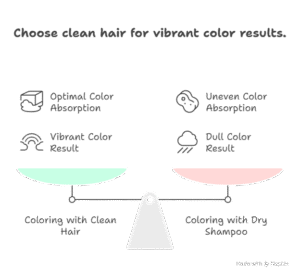
- Physical Barrier: The dry shampoo forms a coating on your hair, preventing the dye from properly penetrating the hair cuticle.
- Uneven Absorption: Areas with more dry shampoo might absorb less dye, while cleaner spots absorb more, leading to a patchy, inconsistent color.
- Chemical Interference: While less common, some ingredients in dry shampoo could potentially react with the chemicals in hair dye, leading to unpredictable color results or even damage.
How Hair Dye Works: A Need for a Clean Canvas
Hair dye, whether permanent, semi-permanent, or demi-permanent, relies on direct contact with your hair shaft to deposit color pigments. For permanent dyes, this involves opening the hair cuticle and depositing color into the cortex. For semi-permanent dyes, it coats the outside of the hair. In either case, success hinges on the dye having an unobstructed path to the hair.
When your hair is clean and free of products, its cuticles are more receptive to the dye. Oils, silicones, and dry shampoo residue can all create a hydrophobic (water-repelling) layer that prevents the dye from adhering or penetrating effectively. Think of it like trying to paint a wall that’s covered in dust and grease – the paint won’t stick, and the finish will be uneven and likely peel off.
The Unfortunate Consequences of Dyeing Over Dry Shampoo
Ignoring the advice not to color hair with dry shampoo in it can lead to a range of undesirable outcomes. These aren’t just minor inconveniences; they can mean wasted time, money, and potentially even damage to your hair.
Patchy and Uneven Color
This is perhaps the most common and frustrating result. Because the dry shampoo residue acts as a barrier, the dye won’t be able to penetrate consistently. You might end up with:
- Lighter Spots: Areas where dry shampoo is heavily concentrated will likely result in a lighter or even no color uptake.
- Darker Spots: Conversely, areas of cleaner hair might absorb more dye, appearing darker than intended.
- Streaks and Splotches: The overall effect can be a streaky, splotchy mess that looks unprofessional and unappealing.
Poor Color Absorption and Fading
Even if some color manages to penetrate, the presence of dry shampoo often leads to compromised color absorption. This means:
- Dull Color: The vibrancy you expect might not be achieved, resulting in a muted or dull shade.
- Quicker Fading: The dye that does take hold might not bond as effectively to the hair, leading to accelerated fading and a shorter lifespan for your new color.
- Wasted Product: You’ve invested in a good quality dye, only for its potential to be severely limited by improper hair preparation.
Potential for Hair Damage
While dry shampoo itself isn’t inherently damaging when used correctly, combining it with harsh chemicals from hair dye can create an unpredictable environment. The dye might struggle to process evenly, potentially leaving some sections over-processed and others under-processed. This can lead to:
- Increased Porosity: Uneven processing can compromise the hair’s integrity, making it more porous and susceptible to future damage.
- Dryness and Breakage: Hair that doesn’t process correctly can become overly dry, brittle, and prone to breakage.
- Scalp Irritation: The dye might sit on the dry shampoo and scalp for longer, potentially leading to increased irritation or sensitivity, especially if you have a sensitive scalp.
Preparing Your Hair for a Flawless Color Application
Now that we’ve established why you shouldn’t color hair with dry shampoo in it, let’s focus on the right way to prepare your hair for dyeing. Proper preparation is the cornerstone of a successful and beautiful hair color transformation.
The Essential Pre-Color Wash
The most crucial step is to wash your hair thoroughly. But it’s not just any wash; it’s a specific kind of wash designed to create the perfect canvas for your dye.
- Use a Clarifying Shampoo: This is key. A clarifying shampoo is formulated to remove product buildup, oil, and mineral deposits that regular shampoos might miss. It will strip away every last trace of dry shampoo, styling products, and even some natural oils.
- Rinse Thoroughly: Ensure all shampoo is completely rinsed out. Any remaining suds can also interfere with color absorption.
- Skip Conditioner (Usually): For most hair dyes, it’s best to skip conditioner immediately before coloring. Conditioner can smooth the hair cuticle, making it harder for the dye to penetrate. Some stylists recommend a light conditioning treatment a few days *before* coloring, but not right before. Always check your dye kit’s specific instructions.
- Drying Your Hair: Most hair dyes are applied to dry hair. Ensure your hair is completely dry before beginning the coloring process. Damp hair can dilute the dye and affect its potency.
Timing is Everything: Ideally, wash your hair about 12-24 hours before coloring. This allows your scalp’s natural oils to return slightly, which can offer a small protective barrier against scalp irritation from the dye, without creating enough buildup to impede color absorption. However, if your hair is particularly oily or has a lot of dry shampoo, washing closer to the dye time (e.g., 2-4 hours) with a clarifying shampoo is better than coloring over residue.
Other Important Prep Tips
- Patch Test: Always, always perform a patch test 48 hours before coloring to check for allergic reactions.
- Strand Test: If you’re unsure about the color outcome, do a strand test on a hidden section of hair first.
- Protect Your Skin: Apply petroleum jelly or a thick cream around your hairline, ears, and neck to prevent skin staining.
- Wear Old Clothes: Hair dye stains!
Recommended Products for Proper Hair Coloring Preparation
To help you achieve the best possible results when coloring your hair, here are some product suggestions focusing on proper hair preparation and maintenance. These products are designed to ensure your hair is a clean, healthy canvas for your chosen dye.
Clarifying Shampoo
Essential for removing all product buildup, oil, and dry shampoo residue, ensuring your hair is perfectly clean and ready to absorb dye evenly. Look for one that’s gentle but effective.
Sulfate-Free Color-Safe Shampoo & Conditioner
Once your hair is colored, switch to a sulfate-free and color-safe duo to protect your new shade and extend its vibrancy. Sulfates can strip color, so these are crucial for maintenance.
At-Home Hair Dye Kit
Choose a high-quality hair dye kit that suits your desired color and hair type. Always read the instructions thoroughly and follow them for best results, especially regarding preparation.
Frequently Asked Questions About Coloring Hair with Dry Shampoo
1. What exactly happens if I try to color my hair with dry shampoo in it?
If you attempt to color hair with dry shampoo in it, you’ll likely encounter several issues. The dry shampoo residue creates a barrier on your hair strands, preventing the dye from penetrating evenly. This often leads to patchy, streaky, or uneven color results, where some sections appear lighter or darker than intended. The dye may also not absorb fully, resulting in a duller color that fades more quickly than it should.
2. Should I wash my hair right before coloring, or wait a day or two?
It’s generally recommended to wash your hair 12-24 hours before coloring. This allows your scalp’s natural oils to replenish slightly, providing a minor protective barrier against potential irritation from the dye. However, if your hair is particularly oily or has significant product buildup (like dry shampoo), a wash closer to the dye time (e.g., 2-4 hours before) using a clarifying shampoo is preferable to coloring over dirty hair.
3. Can dry shampoo affect my hair color after it’s been dyed?
Yes, dry shampoo can affect your hair color even after it’s been dyed. While it won’t drastically change the shade, frequent use of dry shampoo can sometimes lead to a buildup that makes your hair appear duller or can even slightly mute the vibrancy of your color over time. Some dry shampoos, especially those with tint, can also leave a temporary cast on your hair. It’s best to use it sparingly on colored hair and always use a clarifying shampoo periodically to remove buildup.
4. Will dry shampoo make my hair color patchy or streaky?
Absolutely. One of the most common complaints when people try to dye hair with dry shampoo residue is the development of patchy or streaky color. The dry shampoo coats the hair unevenly, creating inconsistent surfaces for the dye to adhere to. This means the dye will absorb differently across your head, leading to an unprofessional and blotchy appearance rather than a uniform, vibrant shade.
5. What’s the best way to prepare my hair for successful coloring?
The best preparation involves starting with a clean, product-free canvas. Wash your hair with a clarifying shampoo 12-24 hours before coloring to remove all buildup, oil, and dry shampoo. Rinse thoroughly and ensure your hair is completely dry before applying the dye. Avoid using conditioner immediately before coloring, as it can smooth the cuticle and hinder dye penetration. This meticulous preparation ensures optimal dye absorption and even color results.
6. How long after using dry shampoo should I wait before washing and coloring my hair?
You should wash your hair with a clarifying shampoo to completely remove all traces of dry shampoo before coloring. There isn’t a specific waiting period after using dry shampoo; the key is to ensure it’s entirely washed out. Once you’ve thoroughly cleansed your hair with a clarifying shampoo and allowed it to dry, you can proceed with coloring, ideally within the 12-24 hour window mentioned earlier, or even a few hours later if your hair gets oily quickly.
Conclusion
The question, “Can you color hair with dry shampoo in it?” might arise from a desire to save time, but as we’ve thoroughly explored, it’s a shortcut that almost always leads to disappointing results. Dry shampoo, while a fantastic temporary fix for oily hair, leaves a residue that acts as a significant barrier to hair dye. Attempting to dye hair with dry shampoo residue can result in a host of problems, including patchy, uneven color, poor absorption, quicker fading, and even potential damage to your hair’s integrity.
For a truly successful and vibrant hair color transformation, proper preparation is non-negotiable. This means starting with a clean, product-free canvas by using a clarifying shampoo to remove all buildup, rinsing thoroughly, and ensuring your hair is completely dry before application. Investing a little extra time in preparation will save you from the frustration and expense of correcting a botched dye job. So, next time you’re ready to color, remember: wash that dry shampoo out! Your hair, and your desired color, will thank you for it.
“`