
Navigating the world of skincare can feel like deciphering a complex code, especially when it comes to identifying various skin imperfections. Many people use terms like “blemish” and “dark spot” interchangeably, leading to confusion and often, ineffective treatment approaches. Understanding the fundamental distinctions between a blemish vs dark spot is not just about semantics; it’s crucial for tailoring a skincare routine that truly addresses your specific concerns. Whether it’s an unsightly breakout or a stubborn patch of discoloration, knowing what you’re dealing with is the first step towards achieving clearer, more radiant skin.
This comprehensive guide will delve deep into the characteristics, causes, and best practices for treating both blemishes and dark spots. We’ll explore the various types of each, highlight their core differences, and provide practical advice on how to prevent and manage them effectively. By the end, you’ll be equipped with the knowledge to accurately identify your skin concerns and empower yourself with targeted solutions, leading you closer to the even-toned, healthy complexion you desire. Let’s unravel the mystery of blemish vs dark spot and pave the way for a more informed skincare journey.
Understanding Skin Imperfections: Blemish Vs Dark Spot
While both blemishes and dark spots manifest as visible changes on the skin, their underlying nature, causes, and how they should be treated are distinct. Misidentifying them can lead to frustration and wasted effort on products that aren’t designed for the specific issue at hand. Let’s break down each type of imperfection.
What Exactly is a Blemish?
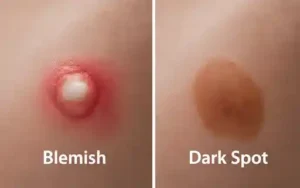
A blemish is a broad term used to describe any mark, spot, or discoloration on the skin. Most commonly, when people refer to a blemish, they are talking about some form of acne or a temporary breakout. Blemishes are typically characterized by their texture, often appearing as raised bumps, redness, or inflammation. They are a sign of active skin irritation or infection.
- Types of Blemishes:
- Acne Lesions: This includes whiteheads (closed comedones), blackheads (open comedones), papules (small, red, tender bumps), pustules (papules with pus at their tips), cysts (large, painful, pus-filled lumps deep under the skin), and nodules (hard, painful lumps deep within the skin).
- Ingrown Hairs: Occur when a hair curls back or grows sideways into the skin, causing a red, often painful bump.
- Temporary Redness: Can be caused by irritation, allergic reactions, or minor injuries.
- Milia: Small, white, pearl-like bumps caused by trapped keratin.
- Common Causes of Blemishes:
- Excess Sebum Production: Overactive oil glands can clog pores.
- Bacterial Growth: Specifically Propionibacterium acnes (P. acnes) thrives in clogged pores.
- Dead Skin Cell Accumulation: These cells can mix with oil and clog follicles.
- Hormonal Fluctuations: Androgens can stimulate sebum production, leading to breakouts.
- Inflammation: The body’s natural response to irritation or infection.
Blemishes are usually temporary, resolving over days or weeks, though severe forms like cystic acne can persist longer and cause significant discomfort.
Decoding Dark Spots: Hyperpigmentation Explained
In contrast to blemishes, dark spots refer to areas of the skin where there is an overproduction of melanin, the pigment that gives skin its color. This condition is medically known as hyperpigmentation. Dark spots are typically flat and appear as patches of skin that are darker than the surrounding areas. They are not usually inflamed or raised, but rather a discoloration.
- Types of Dark Spots (Hyperpigmentation):
- Post-Inflammatory Hyperpigmentation (PIH): Dark spots that appear after an inflammatory event, such as acne, eczema, or injury. They can range from pinkish-red to brown or black, depending on skin tone. This is a critical link in the blemish vs dark spot discussion.
- Sun Spots (Age Spots or Liver Spots): Caused by prolonged exposure to ultraviolet (UV) radiation, these are flat, oval areas of increased pigmentation, commonly appearing on sun-exposed areas like the face, hands, and décolletage.
- Melasma: Characterized by larger, symmetrical patches of dark pigmentation, often on the face (cheeks, forehead, upper lip). It’s frequently triggered by hormonal changes (e.g., pregnancy, birth control) combined with sun exposure.
- Freckles: Small, flat, brown spots that are usually genetic and become more prominent with sun exposure.
- Common Causes of Dark Spots:
- Sun Exposure: The primary culprit for many types of hyperpigmentation, as UV radiation stimulates melanin production.
- Inflammation: As seen with PIH, any trauma or inflammation to the skin can trigger melanocytes to produce excess pigment.
- Hormonal Changes: Estrogen and progesterone can influence melanin production, especially in melasma.
- Medications: Certain drugs can cause photosensitivity or directly lead to hyperpigmentation.
- Genetics: Some individuals are more prone to developing dark spots.
Dark spots are often more persistent than blemishes, sometimes taking months or even years to fade, especially without proper treatment and sun protection.
Key Differences: Blemish Vs Dark Spot at a Glance
To summarize the fundamental aspects of blemish vs dark spot, here’s a quick comparison:
- Nature:
- Blemish: An active skin issue, often inflammatory or textural (e.g., pimple, bump).
- Dark Spot: A residual discoloration, a flat area of excess pigment.
- Appearance:
- Blemish: Can be red, inflamed, raised, pus-filled, or textured.
- Dark Spot: Flat, brown, black, or grayish patches; no inflammation or texture (unless it’s a residual mark from a healed blemish).
- Cause:
- Blemish: Clogged pores, bacteria, oil, hormones, inflammation, ingrown hairs.
- Dark Spot: Excess melanin production triggered by sun exposure, inflammation (PIH), or hormonal changes.
- Duration:
- Blemish: Typically resolves in days to weeks.
- Dark Spot: Can linger for months to years, often requiring consistent treatment to fade.
How Blemishes Can Lead to Dark Spots
One of the most important connections in the blemish vs dark spot discussion is how a blemish can directly evolve into a dark spot. This occurs through Post-Inflammatory Hyperpigmentation (PIH). When the skin experiences inflammation from acne, a cut, rash, or any trauma, it can trigger melanocytes (the cells that produce melanin) to go into overdrive during the healing process. This results in an overproduction of pigment, leaving behind a flat, discolored patch long after the original blemish has healed.
This is why treating blemishes gently and effectively is crucial, not just for clearing the active breakout but also for minimizing the likelihood of developing stubborn dark spots afterward. Picking or squeezing blemishes can worsen inflammation and increase the risk of PIH.
Effective Strategies for Treatment and Prevention
Understanding the distinction between a blemish vs dark spot empowers you to choose the right strategies for clear, even-toned skin. Here’s how to approach treatment and prevention for each.
Treating Blemishes Effectively
Addressing active blemishes focuses on reducing inflammation, killing bacteria, and preventing pore blockages.
- Topical Treatments:
- Salicylic Acid (BHA): Exfoliates inside the pore, ideal for blackheads and whiteheads.
- Benzoyl Peroxide: Kills acne-causing bacteria and helps shed dead skin cells.
- Retinoids (e.g., Adapalene, Tretinoin): Normalize skin cell turnover, preventing clogged pores and promoting healing.
- Tea Tree Oil: A natural antiseptic that can help with mild acne.
- Good Skincare Habits:
- Gentle Cleansing: Wash your face twice daily with a mild cleanser.
- Non-Comedogenic Products: Choose makeup and skincare that won’t clog pores.
- Avoid Picking: Resist the urge to squeeze or pick blemishes, as this worsens inflammation and increases PIH risk.
- When to See a Dermatologist: If over-the-counter treatments aren’t working, or you experience severe, painful acne (cysts, nodules), a dermatologist can prescribe stronger medications (oral antibiotics, isotretinoin) or recommend in-office procedures.
Fading Dark Spots and Achieving Even Tone
Treating dark spots, especially PIH, sun spots, and melasma, requires patience and a multi-pronged approach focused on reducing melanin production and accelerating cell turnover.
- Key Brightening Ingredients:
- Vitamin C: A powerful antioxidant that inhibits melanin production and brightens skin.
- Niacinamide (Vitamin B3): Reduces melanin transfer to skin cells and has anti-inflammatory properties.
- Alpha Arbutin & Kojic Acid: Inhibit the enzyme tyrosinase, which is crucial for melanin production.
- Hydroquinone: A potent skin-lightening agent, often prescribed by dermatologists for severe cases. Use under supervision due to potential side effects.
- AHAs (Alpha Hydroxy Acids) & BHAs (Beta Hydroxy Acids): Exfoliate the skin, helping to shed pigmented cells. Glycolic acid (AHA) and lactic acid (AHA) are particularly effective.
- Non-Negotiable Sun Protection: This is the most crucial step for preventing and fading dark spots. Daily use of a broad-spectrum sunscreen with an SPF of 30 or higher, even on cloudy days, prevents existing spots from darkening and new ones from forming.
- Professional Treatments:
- Chemical Peels: Use acids to exfoliate the top layers of skin, revealing brighter skin underneath.
- Laser Therapy: Targets pigment with concentrated light energy to break down melanin.
- Microdermabrasion: Physically exfoliates the skin, improving texture and fading superficial spots.
Holistic Approach to Skin Health
Beyond targeted treatments, a holistic approach supports overall skin resilience and can help manage both blemishes and dark spots. This includes maintaining a healthy diet rich in antioxidants, staying well-hydrated, getting adequate sleep, and managing stress levels. Consistency in your chosen skincare routine is paramount – results for both blemishes and dark spots often take time, sometimes weeks to months, so patience is key.
Recommended Products
CeraVe Renewing SA Cleanser
A gentle salicylic acid cleanser perfect for daily use to exfoliate and smooth skin, helping to prevent blemishes.
The Ordinary Niacinamide 10% + Zinc 1%
Helps reduce the appearance of skin congestion and brightens skin, targeting both blemishes and dark spots.
La Roche-Posay Anthelios Melt-in Milk Sunscreen SPF 60
Essential for preventing and fading dark spots by providing broad-spectrum UVA/UVB protection.
Paula’s Choice 2% BHA Liquid Exfoliant
A cult-favorite exfoliant that clears pores, reduces blackheads, and helps even out skin tone, addressing both active blemishes and post-blemish marks.
Frequently Asked Questions (FAQ)
Q1: Can blemishes turn into dark spots?
A: Yes, absolutely. This common occurrence is known as Post-Inflammatory Hyperpigmentation (PIH). When a blemish, such as a pimple or cyst, causes inflammation in the skin, it can trigger an overproduction of melanin during the healing process. This results in a flat, discolored patch (a dark spot) that remains long after the active blemish has resolved. Treating blemishes gently and avoiding picking can significantly reduce the risk of PIH.
Q2: How long do dark spots take to fade completely?
A: The time it takes for dark spots to fade varies greatly depending on their depth, your skin type, and the consistency of your treatment. Superficial dark spots might fade in a few weeks to a few months with diligent care. Deeper or more stubborn spots, like those from severe melasma or deep PIH, can take six months to over a year, or even longer, to significantly lighten. Sun protection is critical throughout this process.
Q3: Is popping a blemish bad for my skin?
A: Generally, yes, popping a blemish is highly discouraged. While it might offer temporary relief, it often pushes bacteria deeper into the skin, increases inflammation, and can lead to more severe breakouts, infection, and potential scarring. Most importantly, it significantly raises the risk of developing Post-Inflammatory Hyperpigmentation (PIH), turning a temporary blemish into a long-lasting dark spot.
Q4: What’s the most important step for preventing dark spots?
A: The single most crucial step for both preventing new dark spots and stopping existing ones from getting darker is consistent, daily sun protection. Using a broad-spectrum sunscreen with an SPF of 30 or higher, even on cloudy days and indoors near windows, is non-negotiable. UV radiation is the primary trigger for melanin production and can negate the effects of any brightening treatments.
Q5: Can diet affect blemishes and dark spots?
A: While the link between diet and skin conditions is complex and varies by individual, some research suggests that certain dietary patterns can influence blemishes. For instance, high glycemic index foods and dairy products may exacerbate acne in some people. For dark spots, a diet rich in antioxidants (from fruits and vegetables) can support overall skin health, but diet is less directly linked to dark spot formation than sun exposure or inflammation.
Q6: When should I see a dermatologist for blemishes or dark spots?
A: It’s advisable to consult a dermatologist if your blemishes are severe, painful (cystic or nodular acne), or if over-the-counter treatments aren’t providing relief. For dark spots, seek professional help if they are widespread, not responding to topical treatments, or if you suspect melasma. Also, any new, rapidly changing, or suspicious dark spots should be immediately evaluated by a dermatologist to rule out more serious conditions like skin cancer.
Conclusion
Distinguishing between a blemish vs dark spot is a foundational step toward achieving and maintaining a clear, even-toned complexion. While blemishes represent active, often inflammatory skin issues, dark spots are a manifestation of excess pigmentation, often a lingering consequence of past inflammation or sun exposure. Understanding these core differences empowers you to select targeted treatments, preventing the frustration of ineffective skincare routines.
Remember, treating blemishes gently to avoid post-inflammatory hyperpigmentation is just as important as diligently applying sun protection to prevent and fade dark spots. Consistency and patience are your greatest allies in any skincare journey. By identifying your skin concerns accurately and employing the right strategies, you can confidently work towards a healthier, more radiant glow. Don’t hesitate to consult a dermatologist for persistent or severe concerns; they can provide personalized advice and advanced treatment options to guide you on your path to clearer skin.