There’s nothing quite as satisfying as a lush, uniformly green lawn. It’s the pride of many homeowners across the USA, a verdant carpet that enhances curb appeal and provides a perfect setting for outdoor activities. However, the appearance of unsightly dark green spots on grass can quickly turn that satisfaction into frustration. These darker patches disrupt the homogeneity of your lawn, making it look uneven and, at times, unhealthy.
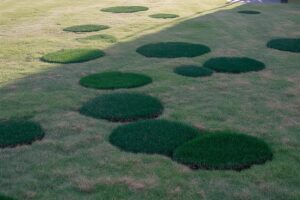 You might have noticed these distinct areas, standing out like islands of intense color against the lighter green of the surrounding turf. What exactly causes these peculiar spots? Are they a sign of a deeper problem, or simply a quirk of nature? Understanding the root causes of these dark green spots on grass is the first step toward achieving the consistently vibrant lawn you desire. From common household occurrences to more complex soil issues, several factors can contribute to this phenomenon.
In this comprehensive guide, we’ll delve into the various culprits behind these darker patches. We’ll explore everything from localized nutrient imbalances and pet activity to environmental factors and even certain types of weeds. More importantly, we’ll equip you with practical advice, diagnostic tips, and effective solutions to identify, treat, and prevent dark green spots on grass, helping you restore your lawn to its uniform glory. Get ready to transform your lawn from patchy to perfect!
You might have noticed these distinct areas, standing out like islands of intense color against the lighter green of the surrounding turf. What exactly causes these peculiar spots? Are they a sign of a deeper problem, or simply a quirk of nature? Understanding the root causes of these dark green spots on grass is the first step toward achieving the consistently vibrant lawn you desire. From common household occurrences to more complex soil issues, several factors can contribute to this phenomenon.
In this comprehensive guide, we’ll delve into the various culprits behind these darker patches. We’ll explore everything from localized nutrient imbalances and pet activity to environmental factors and even certain types of weeds. More importantly, we’ll equip you with practical advice, diagnostic tips, and effective solutions to identify, treat, and prevent dark green spots on grass, helping you restore your lawn to its uniform glory. Get ready to transform your lawn from patchy to perfect!
Understanding Dark Green Spots On Grass
When you see areas of your lawn that are noticeably darker green than the rest, it’s often a sign of localized differences in nutrient availability, moisture, or even grass type. These spots aren’t always a sign of disease or damage, but rather an indication that certain patches are receiving an abundance of something the surrounding grass is not, leading to more vigorous growth or a deeper color. Addressing dark green spots on grass requires a keen eye and an understanding of your lawn’s ecosystem.The Science Behind the Color
The dark green color in grass is primarily due to a higher concentration of chlorophyll, the pigment responsible for photosynthesis. When grass has access to an ample supply of essential nutrients, particularly nitrogen, it produces more chlorophyll, resulting in a deeper, richer green hue. So, when you observe dark green spots on grass, it often points to a concentrated source of nitrogen or other growth-promoting elements in those specific areas.Common Culprits Behind Dark Green Patches
Identifying the exact cause of your dark green spots on grass is crucial for effective treatment. Let’s explore the most frequent offenders:1. Dog Urine: The Most Common Suspect
If you have a furry friend, their bathroom habits are likely the primary reason for those distinct dark green spots on grass. Dog urine is highly concentrated with nitrogen, a key nutrient for grass growth. While a small amount of nitrogen is beneficial, an excessive concentration, as found in dog urine, can lead to a “fertilizer burn” effect. The center of the spot may turn brown or yellow due to the high salt content and nitrogen overload, but the outer ring often appears exceptionally dark green. This is because the nitrogen is diluted enough at the edges to act as a powerful fertilizer, promoting lush growth.- Why it happens: High nitrogen content in urine.
- Appearance: Often a brown or yellow center with a distinct dark green ring.
- Solutions: Dilute immediately with water, designate a “potty area,” or use supplements that balance urine pH.
2. Localized Over-Fertilization
Accidental spills or uneven application of granular fertilizer can easily create dark green spots on grass. If you’ve recently fertilized your lawn, check for areas where too much product may have been dropped or where the spreader overlapped excessively. These spots will receive a concentrated dose of nutrients, leading to a darker green appearance and potentially even fertilizer burn if the concentration is too high.- Why it happens: Uneven fertilizer application or spills.
- Appearance: Irregularly shaped dark green patches, sometimes with burnt centers.
- Solutions: Apply fertilizer evenly with a calibrated spreader, sweep up spills immediately.
3. Decomposing Organic Matter or Buried Debris
Sometimes, dark green spots on grass can appear above areas where organic materials are decomposing underground. This could be anything from old tree stumps and buried construction debris (like gypsum drywall) to pockets of rich compost or even animal carcasses. As these materials break down, they release nutrients into the surrounding soil, creating a localized “fertilizer effect” that promotes darker, more vigorous grass growth directly above them.- Why it happens: Release of nutrients from decaying organic matter.
- Appearance: Often circular or irregular dark green patches that persist over time.
- Solutions: Investigation and removal of the buried material if practical.
4. Specific Grass Varieties or Weeds
It’s possible that the dark green spots on grass aren’t spots at all, but rather patches of a different grass variety or a specific type of weed that naturally has a darker green hue. For instance, some types of tall fescue can appear much darker than a Kentucky bluegrass lawn, or certain broadleaf weeds can stand out with their deeper color. These patches will often have a different texture or growth habit as well.- Why it happens: Presence of different grass species or weeds.
- Appearance: Consistent dark green patches, possibly with different leaf texture.
- Solutions: Selective herbicides for weeds, overseeding with desired grass type, or complete renovation.
5. Localized Moisture or Compaction Differences
Areas of your lawn that retain more moisture or have compacted soil can sometimes exhibit dark green spots on grass, though this is less common than nutrient-related causes. If a spot stays consistently wetter, it might support different microbial activity or nutrient availability. Similarly, compacted spots might impede root growth but in some cases, if they hold certain nutrients, could paradoxically appear darker, although more often compacted areas struggle. This cause is more nuanced and often linked to other factors.- Why it happens: Uneven watering, poor drainage, or soil compaction.
- Appearance: Darker patches in areas of consistent dampness or dense soil.
- Solutions: Improve drainage, aeration, and adjust irrigation.
Diagnosing Your Dark Green Spots: A Step-by-Step Approach
To effectively treat your dark green spots on grass, you need to play detective. Here’s how to narrow down the cause:- Observe the Shape and Location:
- Circular with a brown/yellow center: Highly indicative of dog urine.
- Irregularly shaped, larger patches: Points to fertilizer spills or uneven application.
- Random, persistent spots: Could be buried organic matter or different grass types.
- Consider Recent Activities:
- Have you fertilized recently?
- Do you have pets with access to the lawn?
- Has there been any construction or digging in the area?
- Examine the Soil: Dig a small plug from a dark green spot and a normal area.
- Is there any buried debris?
- Does the soil feel different (e.g., more compacted or looser)?
- Consider a soil test to check nutrient levels.
Effective Solutions for a Uniform Lawn
Once you’ve identified the likely cause of your dark green spots on grass, you can implement targeted solutions:1. Managing Pet Urine Spots
- Dilute Immediately: If you see your dog urinate, immediately douse the area with several gallons of water to dilute the nitrogen.
- Designate a “Potty Spot”: Train your dog to use a specific area, perhaps mulched or graveled, away from the main lawn.
- Pet-Friendly Grass: Consider overseeding with more urine-tolerant grass varieties like fescues.
- Dietary Supplements: Consult your vet about supplements that can help balance your dog’s urine pH, reducing its impact on grass.
2. Correcting Fertilization Issues
- Even Application: Always use a high-quality spreader and calibrate it according to the manufacturer’s instructions. Walk in a consistent pattern to avoid overlaps.
- Sweep Up Spills: If you accidentally spill granular fertilizer, sweep it up immediately to prevent concentrated burns or dark spots.
- Liquid Fertilizers: These are less likely to cause localized burns if applied correctly, but still require even coverage.
3. Addressing Buried Debris and Organic Matter
- Investigate: If a persistent dark green spot on grass appears with no other clear cause, carefully dig a small test hole to see if there’s buried material.
- Remove if Possible: For small pieces of debris or decaying organic matter, removal might be the best long-term solution.
- Soil Amendment: If removal isn’t feasible, you might need to amend the surrounding soil to balance nutrient levels.
4. Dealing with Different Grass Types or Weeds
- Weed Control: For darker green weeds, use a selective herbicide designed for your lawn type that targets the specific weed without harming the desirable grass.
- Overseeding: If the darker patches are undesirable grass types, you might need to gradually overseed the entire lawn with your preferred grass type to achieve uniformity.
- Renovation: In severe cases of mixed grass types, a complete lawn renovation (killing off the existing lawn and reseeding) might be necessary for a truly uniform look.
5. Improving Soil Health
- Aeration: If compaction is a suspected issue, aerate your lawn regularly to improve air, water, and nutrient penetration.
- Soil Testing: A professional soil test will give you precise information about your soil’s pH and nutrient levels, allowing you to make informed decisions about amendments. This can help prevent future dark green spots on grass caused by nutrient imbalances.
- Proper Watering: Ensure your lawn receives consistent, deep watering. Avoid shallow, frequent watering which can lead to uneven moisture distribution.