
The internet is filled with miracle claims, but the truth is that achieving a clear, even-toned complexion requires patience and consistency. Fading hyperpigmentation isn’t an overnight process. In this comprehensive guide, we’ll break down the science behind Vitamin C, set a realistic timeline for results, and share expert tips to help you get the most out of your skincare routine. We’ll explore everything from the right concentration to the crucial role of sunscreen, ensuring you have all the information you need to effectively fade those pesky spots and reveal brighter, healthier skin.
Understanding Dark Spots (Hyperpigmentation)
Before we dive into the timeline, it’s essential to understand what you’re up against. Dark spots are a form of hyperpigmentation, which occurs when your skin produces an excess of melanin—the natural pigment that gives skin its color. This overproduction can be triggered by several factors:
-
- Sun Exposure: UV rays are the primary cause of dark spots, often called sunspots or age spots. They stimulate melanin production as a defense mechanism.
– Post-Inflammatory Hyperpigmentation (PIH): These are the dark marks left behind after an acne blemish, insect bite, or other skin injury heals.
- Hormonal Changes: Fluctuations in hormones, often from pregnancy or birth control, can lead to a type of hyperpigmentation called melasma.
Understanding the cause of your dark spots can help set expectations, as some types respond more quickly to treatment than others.
The Science: How Vitamin C Fades Dark Spots
Vitamin C isn’t just a magic potion; it’s a scientifically-backed ingredient that works in two primary ways to combat hyperpigmentation and improve your skin’s overall appearance.
1. It Inhibits Melanin Production
The core of Vitamin C’s power lies in its ability to interfere with an enzyme called tyrosinase. This enzyme is a crucial component in the melanin production pathway. By inhibiting tyrosinase activity, Vitamin C effectively puts the brakes on the creation of excess pigment. This doesn’t just help fade existing dark spots; it also helps prevent new ones from forming.
2. It Provides Potent Antioxidant Protection
Vitamin C is a powerful antioxidant that neutralizes free radicals—unstable molecules generated by UV radiation and pollution. These free radicals cause oxidative stress, which damages skin cells and can trigger inflammation and pigmentation. By protecting your skin from this daily environmental assault, Vitamin C helps maintain a brighter, more even complexion and supports the skin’s natural healing process.
The Big Question: How Long Does Vitamin C Take to Remove Dark Spots?
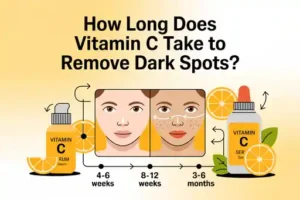
Now for the answer you’ve been waiting for. While everyone’s skin is different, there is a general timeline you can expect when using Vitamin C consistently to fade dark spots. Remember, this is a marathon, not a sprint.
The General Timeline: What to Expect
- 2 to 4 Weeks: You’ll likely notice an initial “glow.” Your skin may appear brighter and more radiant overall. This is due to Vitamin C’s antioxidant effects and its ability to improve skin texture.
- 8 to 12 Weeks (2-3 Months): This is the typical timeframe to see a noticeable reduction in the appearance of dark spots. With consistent daily use, you should observe a visible fading of hyperpigmentation.
- 4+ Months: For more stubborn, older, or darker spots, it may take four months or longer to see significant results. Continued use is key to achieving and maintaining a clear complexion.
It’s crucial to understand that “remove” can be a strong word. For many, Vitamin C will significantly fade and lighten dark spots, making them much less noticeable, but complete erasure with a topical product alone might not always be possible, especially for deep-set pigmentation like melasma.
Key Factors That Influence Your Results
The speed and effectiveness of Vitamin C for hyperpigmentation depend on several critical factors. If you’re not seeing results, one of these might be the culprit.
- Concentration & Formulation: The most effective concentration of L-Ascorbic Acid (the most potent form of Vitamin C) for fading dark spots is between 10% and 20%. Anything lower might not be strong enough for pigmentation, while anything higher can cause irritation without added benefit. The product’s stability and pH also matter immensely.
- Consistency of Use: This is non-negotiable. You must apply your Vitamin C serum every single morning. Skipping days will significantly delay your results.
- Sunscreen, Sunscreen, Sunscreen: If you use a Vitamin C serum without following it up with a broad-spectrum sunscreen of SPF 30 or higher, you are wasting your time and money. Sun exposure will create new melanin and darken existing spots, completely undoing all of Vitamin C’s hard work.
- The Type and Age of Your Dark Spots: Fresher marks, like those from a recent pimple (PIH), tend to fade much faster than sunspots you’ve had for years.
- Your Overall Skincare Routine: Pairing Vitamin C with other complementary ingredients can enhance its effects, while using conflicting products can render it useless.
How to Maximize Vitamin C’s Effectiveness for Fading Dark Spots
To get the best possible results, you need to use Vitamin C correctly. Here’s how to build a routine that supercharges its spot-fading power.
Building the Perfect Morning Routine
The best time to apply Vitamin C is in the morning to take advantage of its antioxidant properties against daily environmental aggressors.
- Step 1: Gentle Cleanser. Start with a clean canvas.
- Step 2: Toner (Optional). If you use a hydrating toner, apply it here.
- Step 3: Vitamin C Serum. Apply a few drops to your dry face and neck. Let it absorb for a minute.
- Step 4: Moisturizer. Lock in hydration and support your skin barrier.
- Step 5: Broad-Spectrum SPF 30+. The most critical step. Reapply every two hours if you’re in the sun.
Ingredients to Pair with Vitamin C
- Vitamin E & Ferulic Acid: This trio is the gold standard. Vitamin E and Ferulic Acid are antioxidants that stabilize L-Ascorbic Acid and supercharge its protective power.
- Niacinamide: Another brightening powerhouse, niacinamide works differently by preventing the transfer of pigment within the skin. Modern formulations allow them to be used together safely.
- Alpha Arbutin & Kojic Acid: These are other well-known tyrosinase inhibitors that can complement Vitamin C’s effects.
Recommended Vitamin C Serums for Dark Spots
Choosing the right product is half the battle. Here are a few highly-regarded options available in the USA, catering to different budgets.
SkinCeuticals C E Ferulic
The iconic, patent-protected formula with 15% L-Ascorbic Acid, Vitamin E, and Ferulic Acid. It’s an investment, but considered the gold standard for a reason.
Maelove Glow Maker Antioxidant Serum
A widely loved and more affordable alternative to SkinCeuticals, featuring a similar blend of Vitamin C, E, and Ferulic Acid plus Hyaluronic Acid.
CeraVe Skin Renewing Vitamin C Serum
A fantastic drugstore option with 10% L-Ascorbic Acid, ceramides, and hyaluronic acid. It’s gentle, effective, and great for those new to Vitamin C.
Frequently Asked Questions (FAQ)
1. Can Vitamin C make my dark spots worse?
No, a stable Vitamin C serum should not make dark spots worse. However, if the serum has oxidized (turned dark brown or orange), it has lost its effectiveness and can potentially cause irritation, which could lead to more hyperpigmentation. Additionally, if you use Vitamin C without sunscreen, the sun exposure will definitely make your spots darker.
2. What percentage of Vitamin C is best for dark spots?
For tackling hyperpigmentation, a concentration of 10% to 20% of L-Ascorbic Acid is considered the most effective range. If you have sensitive skin, you may want to start at 10% or choose a product with a gentler derivative like Sodium Ascorbyl Phosphate.
3. Should I use Vitamin C every day to fade dark spots?
Yes, absolutely. Consistency is the most important factor for seeing results. You should apply your Vitamin C serum every morning without fail to provide continuous antioxidant protection and pigment inhibition.
4. Why did my Vitamin C serum turn yellow or brown?
This color change means the serum has oxidized due to exposure to light, heat, or air. An oxidized serum is significantly less effective and should be replaced. To prolong its life, store your serum in a cool, dark place and make sure the cap is screwed on tightly.
5. Can I use Vitamin C with Retinol?
Yes, but it’s best to separate them to minimize potential irritation. The most common and recommended routine is to use your Vitamin C serum in the morning (for antioxidant protection) and your retinoid product at night (as it can cause sun sensitivity).
Conclusion: Patience and Protection Are Your Best Friends
So, how long does Vitamin C take to remove dark spots? The honest answer is that you can expect to see noticeable fading in about 2 to 3 months with consistent, daily use. While some initial brightness may appear sooner, true pigment correction is a gradual process that requires dedication.
Remember that success hinges on two core principles: consistency with your Vitamin C application and diligence with your daily sunscreen. Think of them as a team—Vitamin C works to correct the damage, while sunscreen prevents new damage from occurring. By choosing a well-formulated product, applying it correctly, and protecting your skin from the sun, you are setting yourself up for the best possible results. Be patient with your skin, and you’ll be well on your way to a brighter, more even-toned complexion.
“`